
TEST YOUR EMPLOYEES AGAINST AI VOICE ATTACKS BEFORE REAL
ATTACKERS DO
AI Vishing Simulation for Employees
A vishing simulation calls your employees the way an AI-driven attacker would: a natural conversation, a believable pretext and a local number. Callstrike runs thousands of these calls at once, with consent first, and turns every call into training.
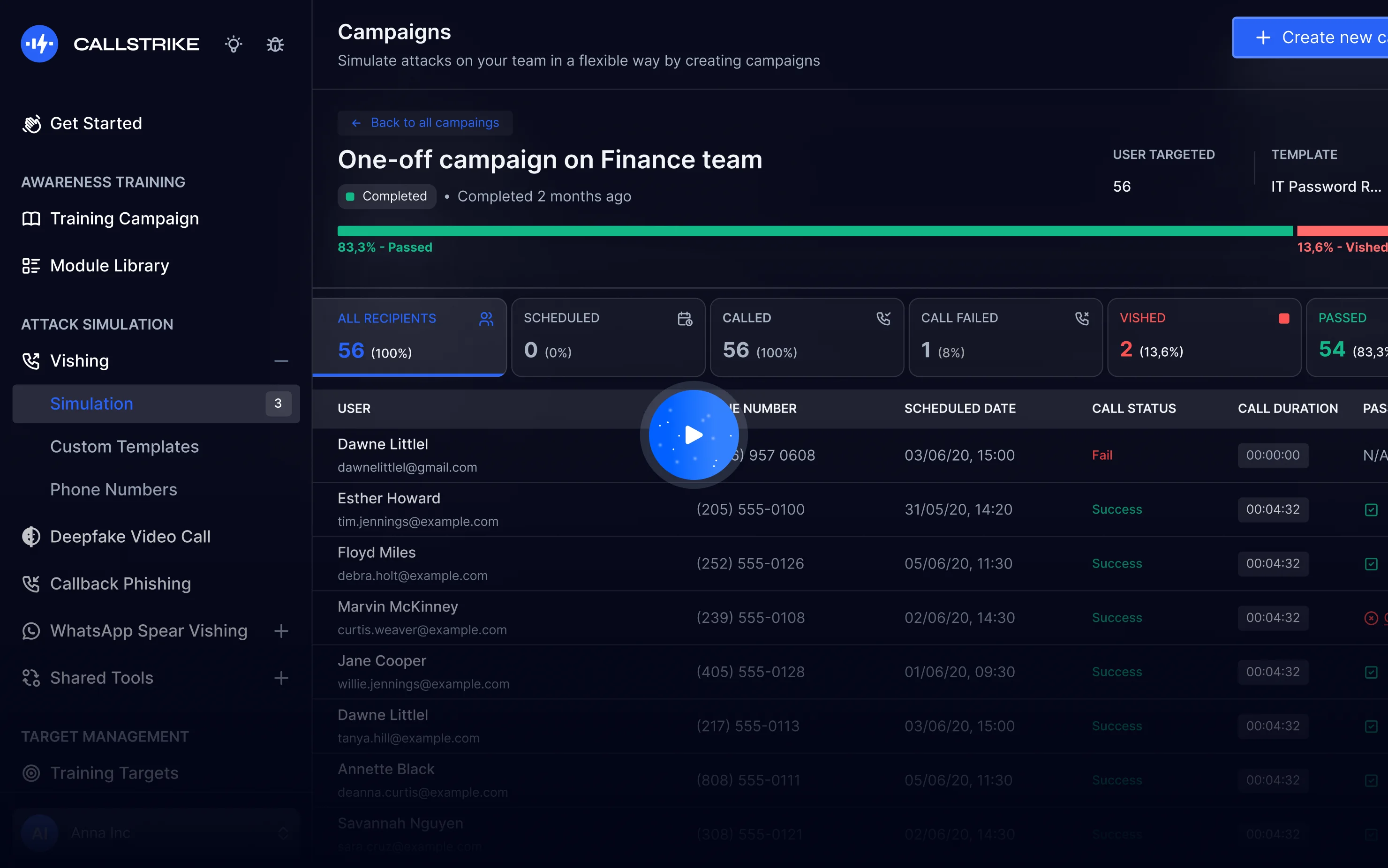
350%
Increase in AI voice phishing attacks since 2024
67%
Of employees fail their first vishing simulation
$4.2M
Average cost of successful social engineering breach
Purpose-built for AI-era attacks
A live AI caller
It listens and answers in real time, instead of reading a script.
Cloned voices, local numbers
A voice your employees know, from a number they would pick up.
Live deepfake video
Video calls on Zoom, Teams, Google Meet and WhatsApp, in the same platform.
How a Vishing
Simulation Works
Our AI agents conduct realistic voice phishing calls that adapt in real time, testing
whether employees can identify and resist sophisticated vishing attacks.
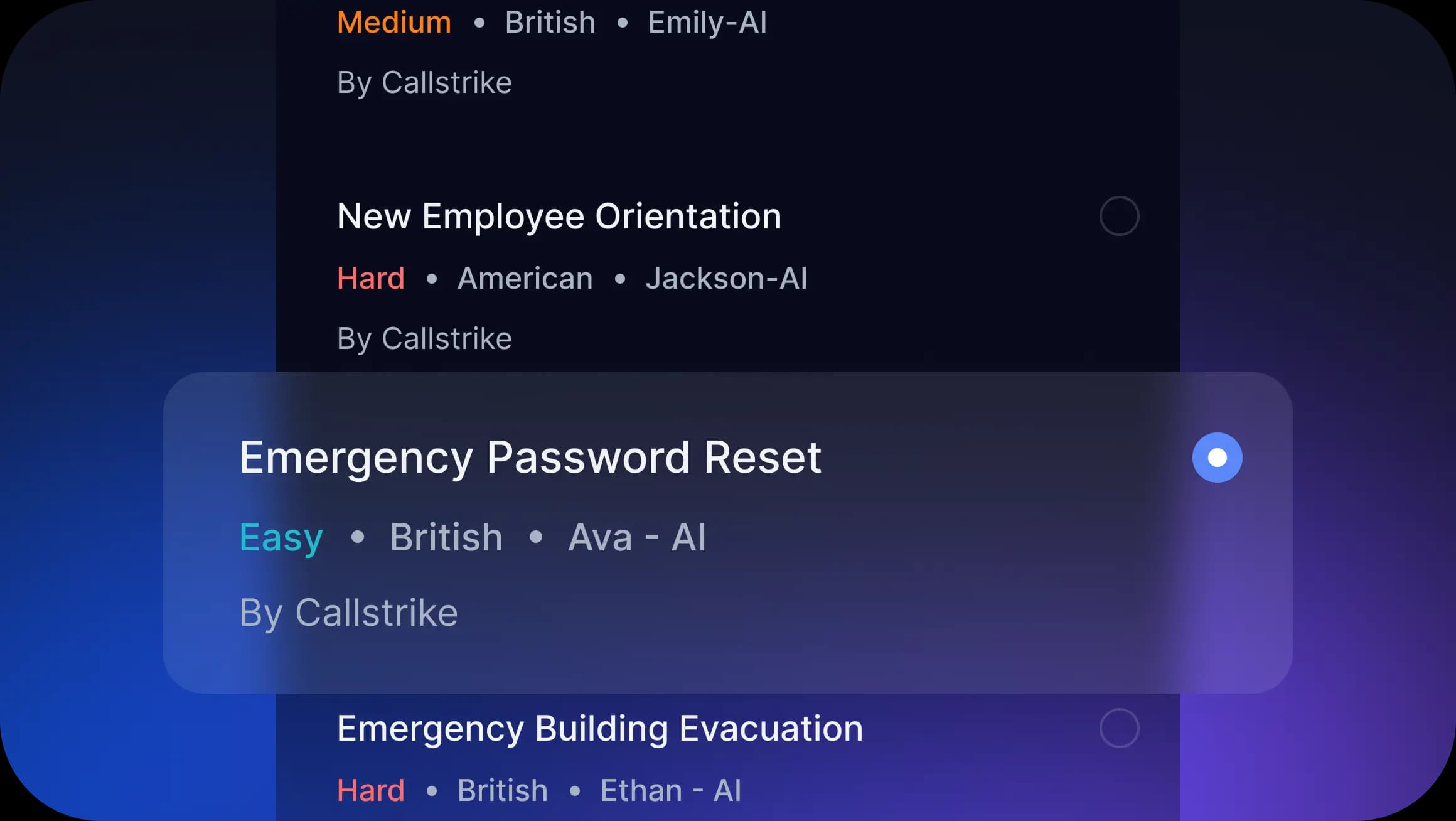
STEP 1
Configure Your Campaign
Select from prebuilt scenarios or create custom attack templates. Choose caller personas, target departments, and define success criteria for your simulation.
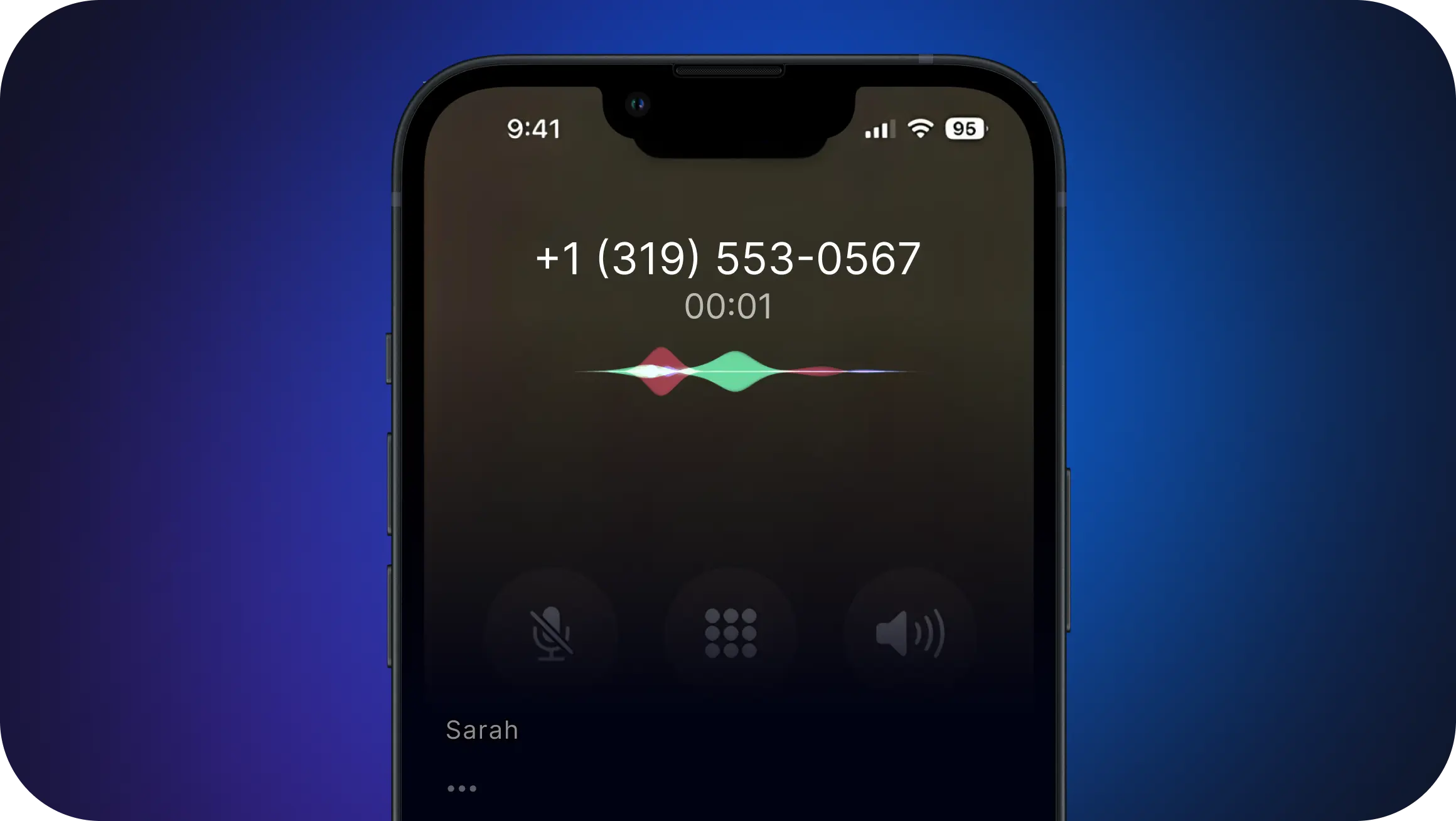
STEP 2
Launch Scalable Attacks
Our AI bots call your employees simultaneously, engaging in natural conversations designed to extract credentials, sensitive information, or trigger unauthorized actions.
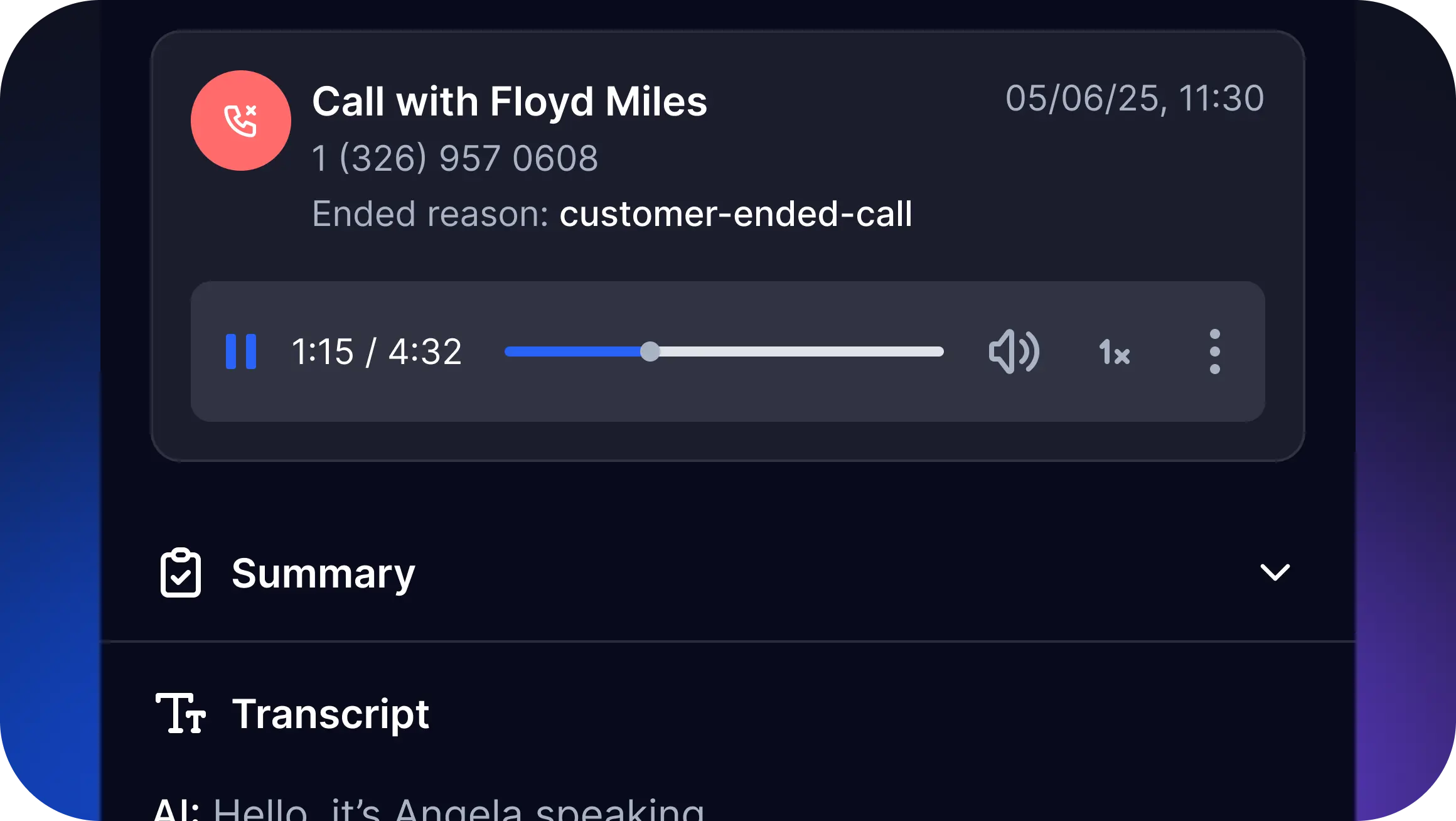
STEP 3
Analyze Results
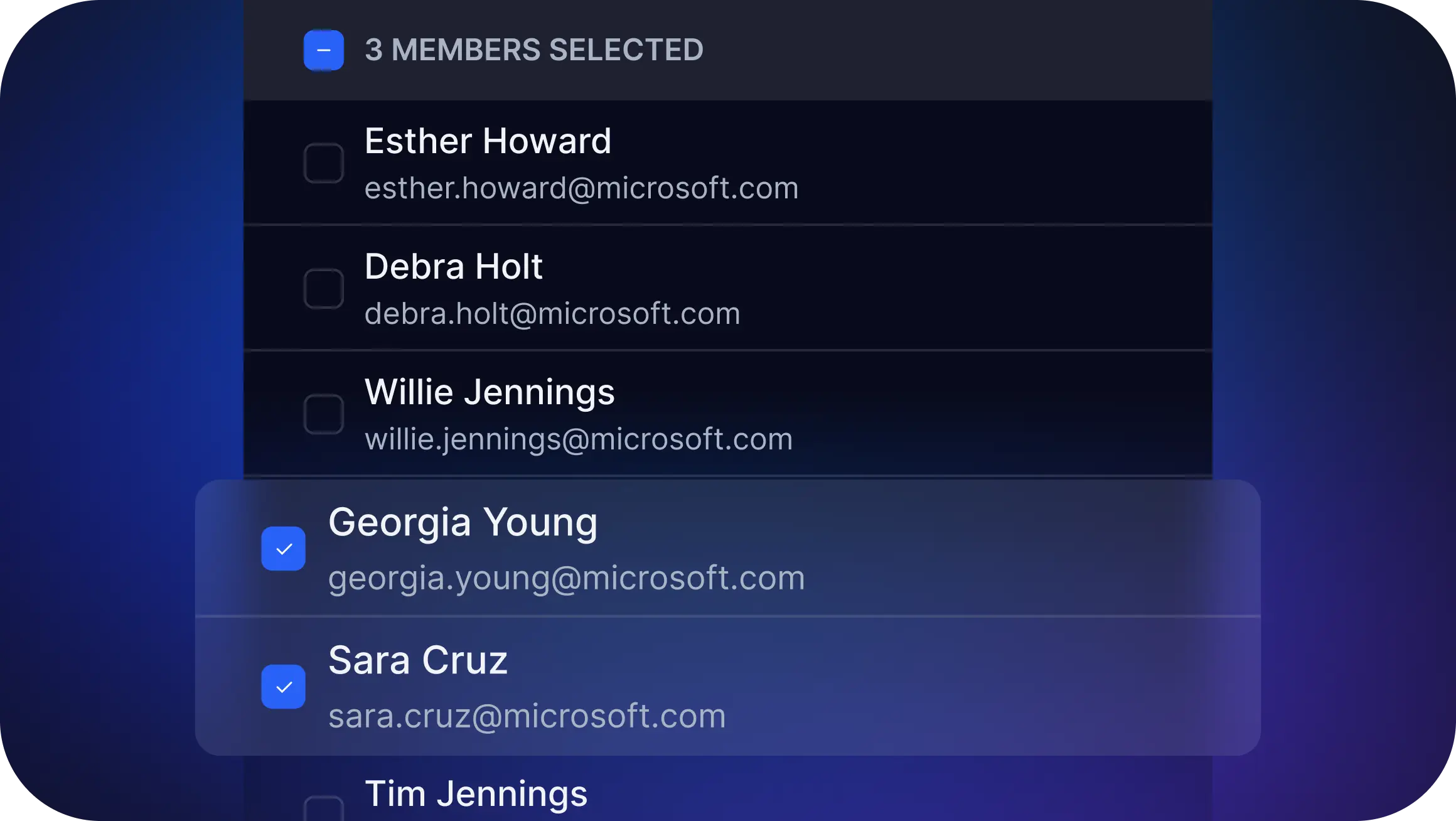
Review detailed analytics including call recordings, transcripts, employee responses, and vulnerability scores. Identify high-risk individuals and departments.
STEP 4
Deploy Targeted Training
Automatically assign personalized training to employees based on their simulation performance. Track improvement over subsequent campaigns.
Two Powerful Attack Vectors
Test your organization with both outbound AI calls and live voice impersonation. These
are the two most common vishing techniques used by real threat actors.
Outbound Vishing
AI bots proactively call your employees, impersonating IT support requesting password resets, vendors confirming payment details, or internal teams seeking sensitive data.
Live Voice Impersonation
A trained operator speaks to your employees in real time in the cloned voice of an executive or supplier, adapting to every answer the way a real attacker would.
Enterprise Vishing Simulation Software
Everything your security team needs to run, manage, and scale AI voice phishing campaigns
across the enterprise, no hardware or GPUs required.
Realistic AI Conversations
Advanced language models enable natural, contextual conversations that adapt to employee responses in real-time.
Custom Scenario Builder
Create unlimited attack scenarios with our intuitive template builder. Define personas, scripts, and extraction goals.
Ambient Audio Realism
Add background sounds like airport noise, coffee shops, or office environments to increase attack authenticity.
Global Phone Numbers
Acquire local phone numbers from all US states and 40+ countries directly within the platform.
Caller ID Spoofing
Display legitimate-looking caller IDs with STIR/SHAKEN compliance for maximum pickup rates.
Detailed Analytics
Track every interaction with call recordings, transcripts, response patterns, and vulnerability scoring.
Who Uses Vishing
Simulation
From onboarding new hires to validating executive resilience, teams across the organization
rely on Callstrike to stay ahead of voice deepfake threats.
Security Awareness Programs
Incorporate vishing simulations into your ongoing security awareness training to test and reinforce employee vigilance.
Compliance Validation
Demonstrate to auditors and regulators that you actively test employee resilience against emerging AI-powered threats.
New Employee Onboarding
Test new hires during their first 90 days to establish security-conscious behavior from day one.
Department Benchmarking
Compare vulnerability rates across departments to prioritize security investments and targeted training.
Frequently asked questions
A vishing simulation is a controlled voice phishing call to your own employees, made with their consent, to see whether they would share information or take a risky action when a convincing caller asks. Callstrike places the call with an AI voice that holds a natural conversation, records the outcome, and tells the employee it was a simulation so the call becomes training.
Yes. Callstrike is a vishing simulation tool that calls your own employees with an AI voice from a local number, holds a natural conversation around a pretext you choose, such as the IT help desk or payroll, and records whether they share information. Employees consent first, the caller stops as soon as it is asked to, and the call becomes training.
A vishing test is one round of vishing simulation: Callstrike's vishing simulator calls a chosen group of employees and measures who shares information, who refuses and who reports the call. Teams run one as a baseline, then repeat it to show improvement.
Choose a scenario, select the employees, pick local caller numbers and launch. The campaign places and paces the calls and reports every outcome in the dashboard, with follow-up training for employees who were caught out.
Yes. Your team can run Callstrike itself, and partners and MSSPs run it as a managed vishing simulation service for their clients. For the most realistic tests, live operators can join the call with a cloned voice.
Most security awareness platforms were built for email and added voice later, often as a recorded message or a fixed script. Callstrike is purpose-built for AI-era attacks: a live AI caller that listens and answers, cloned voices, local caller numbers, and live deepfake video calls on Zoom, Teams, Google Meet and WhatsApp, all in one platform.
Our AI uses advanced language models that enable natural, contextual conversations. The bots adapt to employee responses in real time, ask follow-up questions, and handle objections just like a human caller would. Most employees cannot distinguish our AI calls from real human callers.
Employees consent before any call is placed. The AI caller stops as soon as an employee asks it to. When the call ends, employees are told it was a simulation, in the call itself, by a follow-up awareness email, or both. Scenarios built on threats, extortion or distress are blocked before they can be saved.
A phone call from a local number. The caller presents as someone plausible, such as the IT help desk, payroll or a courier, and asks for something an attacker would want. Employees who refuse or report the call pass. Either way, they learn what gave the call away.
When an employee shares sensitive information or takes a risky action during a simulation, they are immediately flagged in your dashboard. You can configure automatic training assignment, send notification emails, or simply log the result for your security team to review.
Yes, you have complete control over scenario design. Create custom personas (IT support, vendors, executives, etc.), write custom scripts, define what information the AI should try to extract, and set success criteria for your specific testing objectives.
You can acquire local phone numbers from all 50 US states and over 40 countries directly within the platform. This allows you to test whether employees are more likely to answer calls from local numbers or specific area codes.
Yes, when conducted with proper authorization. As the organization conducting tests on your own employees, you have the right to assess security awareness. Our platform includes consent management tools and documentation features to ensure your program is properly authorized and documented.
Most organizations launch their first simulation within a day of onboarding. Select a pre-built scenario, upload your employee list, choose your phone numbers, and launch. No technical integration or IT involvement required.
Related Reading
How to Hear Your Own Voice Cloned in 60 Seconds, for Free
Callstrike's free voice phishing simulator lets you hear your own voice converted into someone else's in real time, in the browser, with no signup. Pick one of five caller personas, speak for 60 seconds, and hear yourself delivering a real vishing pretext in a stranger's voice. The tool uses real-ti
Read article →
What Happens When a Live Operator Clones Your CEO's Voice
Human-in-the-loop vishing simulation combines live operators with real-time AI voice cloning to test employees against targeted voice phishing attacks. Unlike automated vishing, a live operator can adapt to objections, answer follow-up questions, and exploit context gathered from reconnaissance. Cal
Read article →
Inside an AI Vishing Attack. From Voice Clone to Credential Theft
AI vishing is automated voice phishing that uses cloned voices to impersonate executives over the phone. Attackers need as little as 10 seconds of publicly available audio to create a convincing voice replica. The AI bot then calls employees with tailored social engineering scenarios, adapting in re
Read article →Explore Related
What Is Vishing?
How a vishing call works, why AI made it worse, and the warning signs.
GuideVishing Examples
Six common vishing calls and four real attacks that started with a phone call.
GuideVishing Training for Employees
How the training works and what employees learn from a real call.
GuideAI Voice Deepfake Phishing Training
Train employees against a cloned voice, with a live AI caller and consent first.
ProductHuman-in-the-Loop Voice Phishing
Add live operators with cloned voices for the most realistic vishing test.
ProductFree Voice Phishing Simulator
Hear AI clone your voice live in your browser. No sign-up required.
ProductDeepfake Video Call Defense Testing
Run controlled deepfake video call defense tests on Zoom, Teams, and Meet.
SolutionSecurity Awareness Training
Build a complete deepfake awareness programme for your organisation.
IndustryHealthcare
How healthcare organisations defend against AI voice phishing.
IndustryFinancial Services
Protect finance teams from voice cloning and vishing attacks.
ProductTry the Free Demo
Experience a live deepfake detection demo in your browser. No sign-up required.
Ready to Test Your Voice Attack
Defenses?
Launch your first vishing simulation in minutes. No hardware required
everything runs in your browser.