
TL;DR: Deepfake phishing simulation software places employees on realistic calls where a cloned voice or a live face swap asks for something unusual, so they can practise pausing and verifying. Before buying, check that it covers both phone calls and video meetings, that every person whose voice or face is used has authorised it, that employees consent to the programme first, and that the caller stops when asked. It should use ordinary pretexts, never ask for anything harmful, and show results by team so you can fix weak processes.
Why buy deepfake phishing simulation software at all?
The attack it prepares employees for is simple to describe. Someone who sounds exactly like the finance director rings with an urgent payment. Someone who looks like the chief executive joins a video meeting and asks for a file. Nothing about the request is technical. It works because the voice or face is familiar and the request feels routine.
Awareness slides can describe that call, but they cannot make anyone feel it. The pressure of a familiar voice in a hurry is the thing employees need to recognise, and the only safe way to practise it is on a simulated call before the real one arrives.
That is the job of deepfake phishing simulation software. To see how little material a convincing fake needs, our post on the free deepfake simulation generator tool walks through it. This guide is about choosing the software, and the questions that separate a useful product from a convincing demo.
Does it cover the calls your employees really take?
Deepfake attacks arrive on more than one channel. Some come as a phone call in a cloned voice. Others come as a video meeting where the face on screen has been swapped in real time. Software that covers only one of these leaves a gap that attackers will find.
Ask which channels the product supports and test each one in a trial. For voice, check that the caller holds a real conversation rather than playing a clip, and that it can ring from a local number. For video, check that the meeting looks like an ordinary invitation on the tools your company already uses, and that the swapped face holds up when the employee asks a question or the light changes.
Then ask who the calls are aimed at. Finance teams approve payments, assistants manage diaries and files, help desks reset accounts. Good software lets you match the scenario to the team that would really receive it, so each group practises the request it is most likely to face. To see how we approach it, read our page on deepfake phishing simulation.
Who has agreed to what?
This is where products differ most, and where a poor choice causes real harm. Two kinds of consent matter.
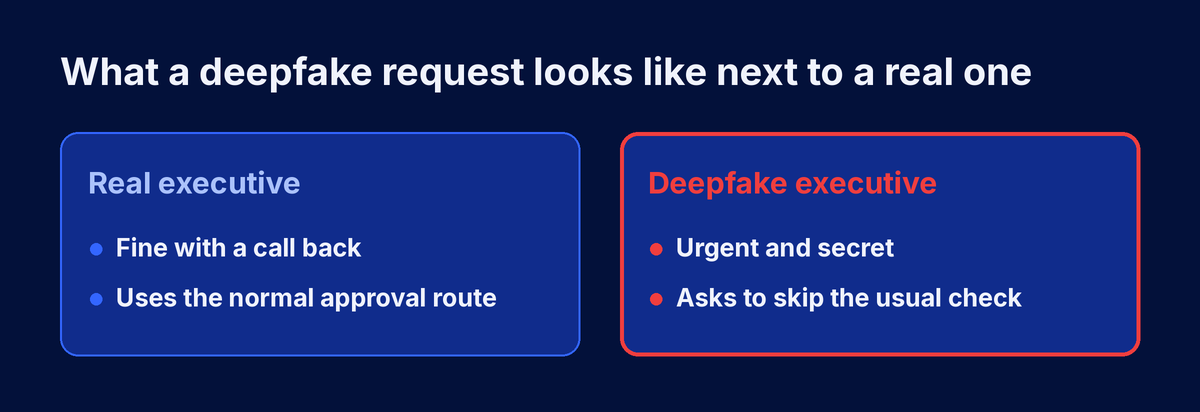
The first is the person being imitated. If a simulation uses a real executive's voice or face, that executive should authorise it first, in writing. Software that will clone anyone from a public video without asking is teaching the wrong lesson about how these tools should be used.
The second is the employee being called. Employees should agree to the training programme before any call is placed. They will not know when a call comes or what it asks, but they will know the programme exists and why.
Two more rules belong here. The caller should stop the moment an employee asks it to stop or end the call, or says they are not comfortable, because ending the call to verify is the behaviour you are training for. And the scenario should never ask for anything that would cause real harm if it were handed over, or rely on threats or distress to work.
What happens after the call?
The call is only half the product. What happens in the minutes after it decides whether anything is learnt.
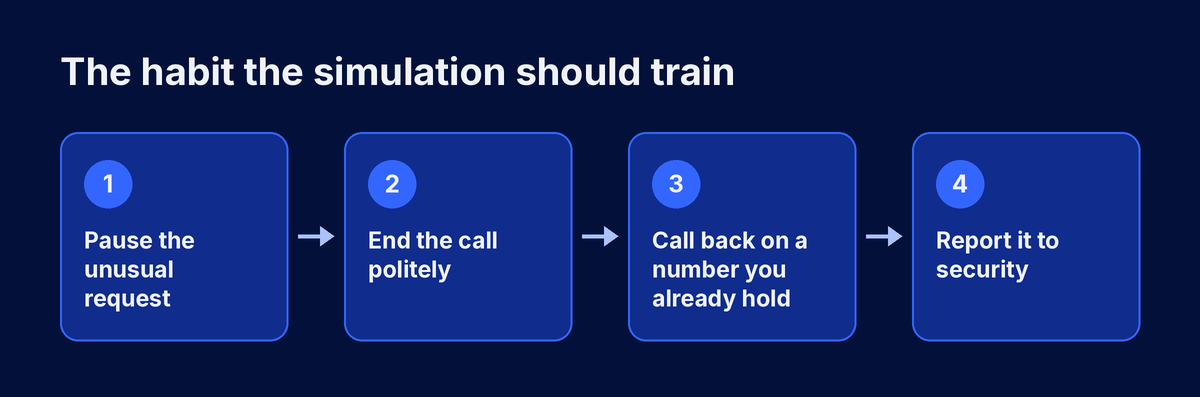
Check that employees are told it was a simulation, shown the moment they could have paused, and reminded of the habit you want. That habit is the same whatever the channel.
Then look at the results. Each call should end with a clear outcome, whether the employee shared what was asked or refused. Read those outcomes by team rather than by person. A team that shares more often usually has a process that lets urgent requests skip a check, and fixing that process does more than any amount of training.
An honest limit to keep in mind
No simulation can promise that employees will spot a deepfake by ear or eye. The fakes keep improving, and a test that teaches people to look for glitches will age badly. Good software does not train detection. It trains a response that works however good the fake becomes, which is to pause and verify through a channel you already trust.
Deepfake phishing simulation software is worth buying when it tests the calls your employees really take, treats everyone involved fairly, and turns each call into a lesson and a process fix. Ask about channels, consent and results, and test all three in a short trial before you sign.
Frequently Asked Questions
Q: What is deepfake phishing simulation software?
A: It is software that places employees on realistic calls where a cloned voice or a live face swap asks for something an attacker would want, such as a payment or a file. It runs with employee consent, stops when asked, and records each outcome so the company can offer training and fix weak processes.
Q: Is it legal to use an executive's voice or face in a simulation?
A: It should only happen with that executive's written authorisation and with employees consenting to the training programme first. Rules differ by country, so involve your legal and privacy teams before the first round, and choose software that requires every subject to authorise the use of their likeness.
Q: Should deepfake simulation software train employees to spot fakes?
A: Not as the main lesson. Deepfakes keep improving, so spotting glitches is unreliable. The better lesson is a habit that works however good the fake is. Pause any unusual request made by voice or video, end the call, and verify it on a number or channel you already trust.
Q: How do we measure a deepfake phishing simulation?
A: Record whether each employee shared what was asked or refused, and read the results by team rather than by person. Repeat with different ordinary pretexts over several months to see whether the pattern changes, and fix the processes that let urgent requests skip a check.
See it from the employee's side
Take the free deepfake security training demo yourself first. Then see how simulations fit into wider deepfake executive protection for the people attackers most often imitate.
Share this article
Found it interesting? Don't hesitate to share it to your friends or colleagues