
TL;DR: A holiday vishing scam uses the Black Friday rush to make a fake call sound routine. Scammers pose as couriers, retailer support lines or head office, sometimes with a cloned voice or a deepfake video, and ask for a code, a payment or a password while everyone is busy. Retailers are hit twice, as their brand is copied to fool shoppers and their own customer service agents and store managers are called. The defence is a habit. Hang up and call back on a number you already hold, however urgent the call sounds.
What a retail security lead should do before Black Friday
If you run security or awareness training for a retailer, peak week is when a holiday vishing scam is most likely to reach your people. Scam calls borrow whatever is already happening, and in late November that means deliveries, refunds, stock counts and urgent requests from head office. Fake shops copy real brands, and deepfake video can put a famous or familiar face on an offer or a call.
Much of the public advice about these scams is written for people at home. It matters at work too, for two reasons. The same employees who shop on their phones at lunch answer calls on behalf of the business all afternoon, and the habits a scammer exploits do not change when the badge goes on. Retailers also sit on both sides of the scam. Their brand is copied to fool shoppers, and their own people are called by scammers who know the busiest week of the year is the easiest week to rush someone.
The job before peak week is simple to state. Give every employee, seasonal or permanent, one verification habit, and let the teams most likely to be called rehearse it.
This post explains how a holiday vishing scam works, why it lands in a peak week, and how a retailer can train employees to stop it.
How a holiday vishing scam works
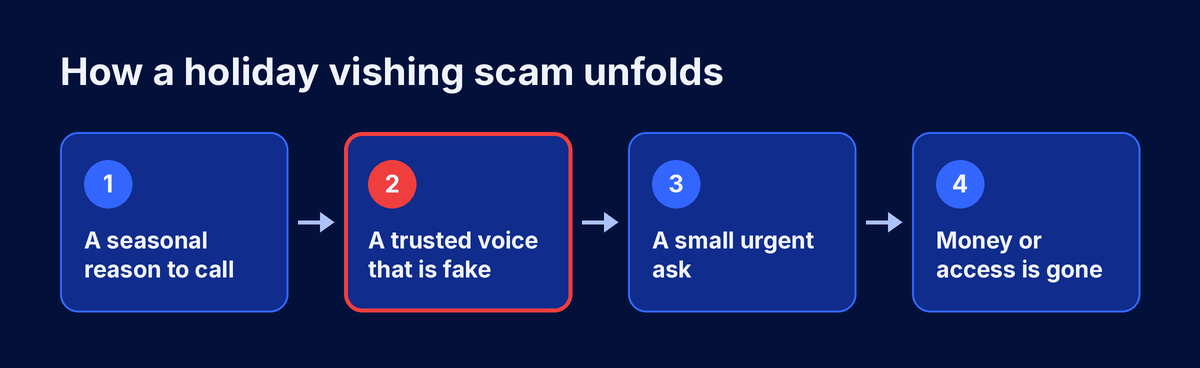
Vishing is phishing by voice. In the holiday version, the pretext borrows whatever is already happening that week, which is why it sounds so ordinary.
- The pretext matches the season. A courier with a parcel problem, a retailer's support line about a refund, or head office about a stock count. Everyone expects these calls in late November.
- The voice sounds right. Scammers pose as customer service agents for a known brand, or as a manager from head office. AI makes this cheaper, because a caller can be scripted, and a cloned voice can be built from audio posted online.
- The ask is small. Read out a code, confirm a card, approve a sign in, change a delivery address or reset a till password.
- The clock is running. The parcel goes back today, the offer ends at midnight, the store opens in ten minutes.
Inside a retailer, the same pattern lands on two groups in particular. Customer service agents take calls from strangers all day and are measured on how quickly they help. A scammer posing as a customer can ask for an order to be redirected, a refund to be sent to a new card, or account details to be changed. Store managers hold keys, till access and supplier contacts, and in a peak week they are called constantly by head office, suppliers and couriers. A caller claiming to be the regional director, sometimes in a cloned voice, can ask a store manager to buy gift cards for an employee reward, share a login or approve an urgent payment.
Deepfake video adds one more layer. The same technology that puts a famous face on a fake shopping ad can put a familiar executive's face on a video call. Our post on how much audio it takes to clone a voice explains why a few minutes of public speech is enough raw material.
Why the scam lands in a busy week
Holiday scams do not rely on clever technology so much as on timing. The rush itself does most of the work.
- Volume hides the fake. When the phone rings every few minutes, one more call about an order or a delivery does not stand out.
- Helpfulness is the job. Customer service agents are trained to solve the problem in front of them. A scammer turns that instinct into the attack.
- Seasonal workers are new. Temporary employees join in November and have not yet learned what a normal request from head office looks like.
- Exceptions are normal. Peak week is full of real urgent requests, so an urgent fake one looks like the rest.
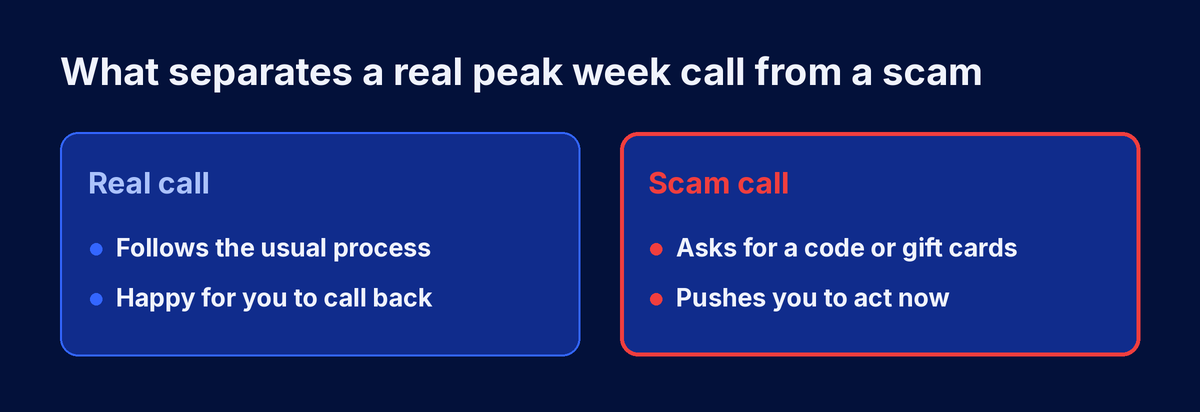
None of this is solved by telling employees to listen harder. A good clone sounds like the person it copies. The defence has to work even when the voice is perfect.
The habit that stops a holiday vishing scam
There is one habit that breaks every version of this call.
Hang up and call back on a number you already hold. A real courier, customer or head office contact will still be there when you ring the number in your own system. A scammer will not.
Three rules make that habit easier to keep in a busy week.
- Nobody from head office will ask you for gift cards, a password or a one time code by phone.
- A change to a delivery address, refund card or account detail is confirmed through the order system, never by a caller's word.
- Report the call, even if you hung up. One report on a Saturday morning can warn every store before the same caller rings them.
Seasonal employees need these rules on their first day, not in January. A short brief at induction, with the call back number printed where they work, costs little and closes the gap a scammer looks for.
How a retail business can rehearse the peak week call
- Seasonal employees. New seasonal employees in retail get an AI vishing simulation, a live AI caller posing as a customer who wants a refund sent to a new card.
- Store managers. For store managers, human-in-the-loop voice phishing puts a trained operator on the phone, speaking live in the cloned voice of a regional director who wants gift cards.
- Store managers on camera. A deepfake video call shows whether store managers still check a request from a face-swapped head office director.
Employees consent before any call, and the caller stops when asked. Each campaign shows who shared and who refused.
The wider programme sits in deepfake security awareness training, and our page of vishing examples shows more of the pretexts retail employees are likely to hear.
Frequently Asked Questions
Q: What is a holiday vishing scam?
A: A holiday vishing scam is a fraudulent phone call that uses the Black Friday and holiday rush as its cover. The caller poses as a courier, a retailer's support line or head office and asks for a code, a payment, gift cards or a password, relying on urgency and a busy week to stop the target checking.
Q: Why are retail employees targeted during Black Friday?
A: Retail employees take more calls than usual, many are new seasonal workers, and urgent requests are normal in peak week. A fake request from a customer, courier or head office blends in. Customer service agents and store managers are attractive because they can change orders, issue refunds and reach tills and accounts.
Q: Can scammers use deepfakes in holiday scams?
A: Yes. Deepfake video is used in fake shopping ads, and the same techniques can clone a manager's voice or put an executive's face on a video call. Because a good clone sounds and looks real, the defence is to verify the request through a known number rather than trust the voice.
Q: How do you train employees against holiday scam calls?
A: Teach one habit, hanging up and calling back on a number you already hold, and give it to seasonal employees on day one. Then let employees practise it with a consented vishing simulation that uses peak week pretexts, so they rehearse the call before a real scammer places it.
Try it before peak week
To see how the training works before you brief your stores, try the free deepfake security training demo, then plan which teams rehearse first.
Share this article
Found it interesting? Don't hesitate to share it to your friends or colleagues